
Guidebook
Lonely Planet Indonesia
Lonely Planet · 2024
Covers East Java for Tumpak Sewu and the Bromo area, which many visitors combine with the falls.

Indonesia · East Java
A 120-metre curtain of dozens of streams pouring into a round, jungle-walled gorge on the Lumajang–Malang border, fed by rivers off Semeru, Java's highest and busiest volcano. Look down from the rim, or climb and wade to the bottom.
Full guide Checked September 2026 by David Bussell · 38 sources
Tumpak Sewu does not fall from a single lip. The Glidik river, which rises on the slopes of Semeru, reaches the edge of a deep, semi-circular box canyon and splits into dozens of separate threads that pour about 120 metres down a curved wall of green, fern-covered rock, while more streams burst out of the cliff face itself. The Javanese name loosely means 'a thousand waterfalls', and from the rim that is exactly how it reads: a horseshoe of white strands closing in on one another around a misty basin, with the cone of Semeru often smoking on the skyline behind.
The river at the bottom is the border between two regencies, and so there are two ways in. From Sidomulyo village in Pronojiwo, on the Lumajang side, a short walk from the car park reaches the panorama viewpoint on the rim, and a steep trail of steps, ropes and ladders then drops into the gorge, where you wade the river to stand inside the amphitheatre. A few minutes further on is Goa Tetes, a dripping cave and cliff where water runs over the rock in front of you. From Sidorenggo village in Ampelgading, on the Malang side, the managers of Coban Sewu run their own guided descent down steeper, near-vertical ladders.
Most visitors come on a long day from Malang, two and a half to three hours away, or as the first stop on a three-day loop that goes on to the sunrise over Bromo and the blue fire of Ijen before crossing to Bali. The rim takes ten minutes and anyone can do it. The base is a three- to four-hour outing of mud, spray and cold water that rewards anyone reasonably fit with the rare feeling of standing inside a waterfall rather than in front of it. Just keep an eye on the volcano upstream.
The Glidik rises on Semeru, one of Indonesia's most active volcanoes. On 27 September 2026 it was at Level III (Siaga) and erupting several times a day. On 19 November 2025 pyroclastic flows ran up to 13 km down the Besuk Kobokan valley and the alert went to Level IV (Awas) before dropping back on 29 November. In December 2021 an eruption killed 69 people, 14 of them in Pronojiwo, the district Tumpak Sewu lies in. Official exclusion zones cover the crater and the Besuk Kobokan valley, not the falls, and the site stayed open in November 2025, but authorities told people not to go down to Semeru-fed rivers, where rain can send cold lava flows. Check the level on MAGMA Indonesia and follow the gate's call on the day.
Sidomulyo village, Pronojiwo (Lumajang side)
The picture everyone knows is taken here. A short walk from the Sidomulyo car park brings you to a railed platform on the rim, looking straight across the gorge at the full horseshoe of streams, with Semeru behind on a clear morning. It needs no fitness, no guide and no wet clothes, and it is the one part of the site that usually stays open when rain shuts the trail down. Come early, before cloud builds over the volcano and the tour vans arrive.
Trail down from the Sidomulyo panorama (Lumajang side)
From the rim, a steep trail of steps, handrails, ropes and bamboo and metal ladders drops through the jungle into the gorge. At the bottom you wade the Glidik and pick your way over wet boulders into the amphitheatre itself, where the spray soaks you in seconds. Carry on upstream for 15–20 minutes and you reach Goa Tetes, a cave and overhang where water trickles over mossy rock you can stand behind. The climb back out is the hard part. Expect to get wet to at least the knees.
Sidorenggo village, Ampelgading (Malang side)
The Malang regency runs its own entrance from the west, under the name Coban Sewu, and it is the steeper route: ladders fixed almost vertically into the cliff, with a view of the falls from the river below. Here a local guide is compulsory for the descent, one guide to no more than five visitors, and accident insurance is built into the ticket, which can be bought online. It is the natural choice if you are driving from Malang, but a harder trail than Sidomulyo.
Go in through Sidomulyo on the Lumajang side: it has the panorama, the gentler trail to the base and Goa Tetes on one ticket. Choose Coban Sewu only if you want the harder ladder route. Either way, pay once at an official gate and keep your ticket.
June to September gives the safest trail and clearest mornings; April, May and October are fuller and quieter, and November to March often closes the base after rain.
Rain decides whether you reach the bottom. In the dry months the river crossing is manageable and the trail stays open; in the wet season flow is bigger, but the descent is slick and often closed after rain, and lahars are a real risk on Semeru's rivers.
The most reliable months for the base: firmer trail, lower and clearer river crossings, and the best chance of Semeru standing clear behind the falls in the early morning. Flow is lighter than in the monsoon, but the amphitheatre is still full of streams. It is also the busiest stretch, with combined Bromo and Ijen tours arriving through the day, so aim to be at the gate soon after 07:00.
The edges of the dry season bring fuller falls and fewer people, with afternoon showers becoming more likely as October goes on. Mornings are usually the dependable window: go down early and be back up before the clouds build. Trails can still be closed at short notice after a heavy downpour, so leave a spare day if the base is the point of your trip.
Tumpak Sewu at its most powerful: more streams, heavier spray and a louder gorge. It is also when the descent is most often shut, the steps run with water and the river rises. Semeru-fed rivers carry cold lava flows after heavy rain, and in November 2025 authorities advised against going down to the river at all. Plan on the rim and treat the base as a bonus.
Recent visitors consistently say the same thing: arrive when the site opens at about 07:00 and you have the rim and the trail almost to yourself, with the best odds of a clear view of Semeru before cloud builds over the summit. Staying in a Sidomulyo homestay the night before makes this easy; driving from Malang means leaving around 04:00–05:00.
Entry fees are the 2025/2026 rupiah rates reported by Lumajang and Malang regency sources, regional news and 2026 visitors, converted at about 17,900 IDR to $1 (September 2026). Tour and hotel prices are 2026 advertised listings or review-site ranges, and homestay prices are 2024 figures; treat all as a planning guide, not a quote.
The reason to make the trip. From the panorama platform, steps, handrails, ropes and bamboo and metal ladders drop through the forest for 30–45 minutes to the Glidik, which you wade before scrambling over wet rocks into the amphitheatre. Standing inside the ring of falls, soaked by spray, is the payoff. Wear sandals with real grip, put your phone in a dry bag, and allow up to an hour for the climb out.
Best June – September; often closed after rain
Pay on the day — nothing to book in advance.
The classic view, from a platform on the rim of the gorge a short walk from the Sidomulyo car park. You see the full semi-circle of streams at once, which you cannot do from the bottom, and on a clear morning Semeru's grey cone behind it. This is the whole visit for many people, and it is what remains open when rain closes the trail. Go early: cloud tends to build over the volcano by late morning.
Year-round; clearest early mornings June – September
Pay on the day — nothing to book in advance.
Upstream from the foot of Tumpak Sewu, 15–20 minutes of river walking brings you to Goa Tetes, whose name means 'dripping cave': an overhang and small caves where springs seep and trickle over mossy, mineral-stained rock, with small falls you can stand behind. Most people continue from here up a metal staircase that climbs back towards the car park, making a loop. Ask at the gate whether it is included in your ticket before paying again.
Dry season; closes with the base trail after rain
No booking needed.
The western approach, run by the Malang regency side under the name Coban Sewu. It is steeper than the Sidomulyo trail, with ladders fixed nearly vertically into the cliff, and a local guide is compulsory: each guide takes at most five visitors and a limited number of trips a day. Tickets, which include Jasa Raharja accident insurance, can be bought in advance at cobansewu.com. Only for people comfortable on exposed ladders.
Dry season; no descents after 15:00 or in bad weather
Pay on the day — nothing to book in advance.
The simplest way to do it without a car. Several Malang operators sell a pickup-to-drop-off day with a driver and a guide for the descent, usually leaving before dawn to reach the gate early, then the rim, the base and Goa Tetes before the drive back. Listings on GetYourGuide start at about $38 and are highly rated. Check whether the entrance fee and guide are included, and what happens if the trail is closed.
Year-round; base access depends on weather
A fuller day in the Pronojiwo hills. Along with the Tumpak Sewu descent and Goa Tetes, this guided trek adds Kapas Biru, a separate waterfall in the same volcanic foothills with its own viewpoint, which sees far fewer visitors. Transport from Malang, water, snacks and all entrance fees are included. The operator warns it needs moderate fitness and is not suitable for anyone with vertigo or limited mobility. Bring water shoes and quick-dry clothes.
Dry season best
East Java's standard loop: Tumpak Sewu on day one, a pre-dawn jeep to watch sunrise over the Bromo caldera on day two, then a midnight start for the Ijen crater on day three, usually ending near Banyuwangi for the ferry to Bali. Meals, two nights' accommodation, entrance fees and an English-speaking guide are included. Reviewers call it exhausting, with very little sleep, and suggest the four-day version.
Year-round; best April – October
The natural partner to Tumpak Sewu. A jeep collects you from Malang in the small hours and climbs into the Tengger highlands for sunrise over the Bromo caldera, where Bromo's smoking crater sits in a sea of sand with Semeru on the horizon. After sunrise you cross the sand sea and climb the steps to the crater rim. It is cold at the viewpoint before dawn, so bring a warm layer.
Year-round; clearest skies in the dry season
The third stop on most East Java loops, several hours' drive east of Bromo. Hikers start after midnight to reach the crater of Ijen in the dark, when burning sulphur gas shows as blue flame, then wait for dawn over the turquoise acid lake. The sulphur fumes are strong: tours supply gas masks, and anyone with breathing problems should think twice. It sits closer to Bali than to Tumpak Sewu.
Year-round; weather permitting
Stay in a Sidomulyo homestay if you want to be first down the trail; stay in Malang, two and a half to three hours away, for better hotels, food and onward transport.
Simple guest rooms and glamping tents close to the Lumajang-side gate, with food grown in its garden. A travel writer stayed here in January 2026 for an early start on the trail, and it has a separate luxury glamping site about 300 m from the falls.
A small family homestay about 500 m from the Sidomulyo entrance, listed with breakfast and clean, simple rooms and rated 4.8 on Tripadvisor, though from only a handful of reviews. Confirm the booking directly before you travel.
Chalets and rooms with mountain views, a swimming pool and breakfast. Top of Tripadvisor's Pronojiwo list, with guests praising clean, comfortable rooms and the pool. A sensible base for two nights with the rim, the base and Kapas Biru.
Malang's most atmospheric hotel: a museum-like collection of Javanese and Peranakan antiques through its public rooms, several restaurants and the Apsara spa. Rated 4.6 on Tripadvisor from more than 800 reviews, and it arranges excursions to Bromo.
A 1933 building, first a Freemasons' lodge and later the city's radio station, restored as a 44-room heritage hotel with a pool, spa and two restaurants. Reviewed well into 2026; a few guests mention noisy rooms.
A 175-room city hotel with batik-themed interiors, a pool and a gym, and a Tripadvisor Travellers' Choice award for 2026. Spacious, good-value rooms about 9 km from Malang airport, with occasional complaints about slow breakfast service.
A large conference-and-leisure hotel from the Indonesian HARRIS chain, rated 4.4 on Tripadvisor from nearly 2,000 reviews. A practical, well-reviewed city base for a night before an early departure to the falls.
Search all Malang stays on Agoda or compare on Booking.com
A civilian terminal inside an air force base, about 10 km from Malang city and roughly 2.5–3 hours from the falls. In 2026 it has flights to Jakarta only (Batik Air to Soekarno-Hatta and Halim, Citilink to Soekarno-Hatta).
East Java's main airport, with far more domestic routes and regional international connections. Malang is about two hours away by toll road; the falls are 4–5 hours by car.
Not a gateway for the falls themselves, but the usual start or finish of Bromo–Ijen–Tumpak Sewu tours, which cross by ferry between Banyuwangi and Bali.
Jakarta is the connection for Malang; Surabaya is the better arrival point for most international visitors, and Bali for those doing the full East Java loop.
Because the Glidik is the border between Lumajang and Malang regencies, each side runs its own entrance: Tumpak Sewu at Sidomulyo (Lumajang) and Coban Sewu at Sidorenggo (Malang). For years visitors who came down from one side were charged again at the bottom by the other. An agreement brokered by the East Java provincial government in February 2025 says you pay once, at the upper gate you entered by, and Coban Sewu moved to online tickets at cobansewu.com. The problem has not gone away: in April 2026 people falsely claiming to represent Coban Sewu again charged visitors at the river, and Lumajang police arrested four of them. Keep your ticket, and if someone asks for money at the base, let your guide deal with it.
Use only the official imigrasi.go.id sites; lookalike e-VOA websites charge extra. Rules and eligible nationalities change, so check before you fly.
 This waterfall
Tumpak Sewu
Indonesia
Height120 mWidth—
 Most similar
Fukuroda Falls
Japan
Height120 mWidth73 m
Of similar height and in Japan
 Largest curtain
Victoria Falls
Zimbabwe · Zambia
Height108 mWidth1,708 m
Largest single sheet of falling water
 Tallest on earth
Angel Falls
Venezuela
Height979 mWidth—
 Widest on earth
Khone Phapheng Falls
Laos
Height21 mWidth10,783 m
Measured across the whole multi-channel system
Angel Falls is 8.2× taller than Tumpak Sewu. It is about the same height as Victoria Falls (108 m). We don't have a reliable crest width for Tumpak Sewu yet, so it is left off the width chart. Tallest · widest lists.
 34:40
 22:03
 22:28
Chosen from YouTube; videos belong to their creators and play from YouTube's privacy-enhanced player.
Guidebook
Lonely Planet · 2024
Covers East Java for Tumpak Sewu and the Bromo area, which many visitors combine with the falls.
Guidebook
Rough Guides · 2024
For a multi-country trip, one book covering the overland routes between the Southeast Asian falls on this site.
On the Lumajang side at Sidomulyo, foreign visitors pay 100,000 IDR (about $5.60) and Indonesians 20,000 IDR, covering the panorama and the base. Goa Tetes has been charged separately at 10,000–50,000 IDR by some visitors in 2026. On the Malang side, Coban Sewu charges 50,000 IDR for foreigners, insurance included. Parking is extra.
Not on the Lumajang side: the panorama and base trail can be done alone, although many visitors hire a local guide for the river crossing and Goa Tetes, at 50,000–250,000 IDR. On the Malang side, Coban Sewu makes a guide compulsory for the descent, with no more than five visitors per guide.
Short but tough. Expect 30–45 minutes down steep, wet steps, ropes and ladders, a wade through the river, then scrambling over slippery boulders, and 45–60 minutes back up. Reasonable fitness and a head for heights are needed. It is not suitable for young children or anyone with mobility problems.
Usually, but check first. Semeru was at Level III (Siaga) in late September 2026. The official exclusion zones cover the crater and the Besuk Kobokan valley, not the falls, and the site stayed open during the November 2025 eruption. Authorities do warn against going near Semeru-fed rivers after heavy rain, when cold lava flows can come down them.
The dry season, roughly April to October, with June to September the most reliable for reaching the base. The wet season, November to March, brings the biggest flow but frequent trail closures, a higher river and lahar risk. Whatever the month, arrive at 07:00 for clear views and fewer people.
By car with a driver or on a tour: about 70 km south via Dampit and Ampelgading, taking 2.5–3 hours. Day tours with pickup start at around $38 on GetYourGuide. Public transport via Malang's Gadang terminal is possible but slow, with several changes and 4–5 hours each way.
Lumajang, for most people. The Sidomulyo entrance has the famous panorama viewpoint, the gentler trail to the base and Goa Tetes. The Malang side's Coban Sewu has steeper, near-vertical ladders and a compulsory guide. Whichever you choose, pay only at that gate and refuse any second charge at the river.
Yes, and most tours do. The standard three-day loop from Malang or Surabaya visits Tumpak Sewu, then Bromo for sunrise, then Ijen for the blue fire, often ending at the Bali ferry. Prices start around $130–190 per person. Reviewers say it is exhausting and recommend four days if you can spare it.
Tumpak Sewu is in Indonesia (East Java). The nearest base is Malang and the closest airport is SUB. Its coordinates are -8.2303, 112.9165.
Prices, fees and entry rules change. We re-check full guides regularly; spotted something out of date? Tell us.
Nearby

Madakaripura Waterfall is a waterfall in Indonesia.

Sedudo waterfall is situated in the Ngliman village, Sawahan district, within Nganjuk Regency, East Java…

Jumog Waterfall is a waterfall in Berjo Village,Ngargoyoso District, in the Karanganyar Regency in Central…
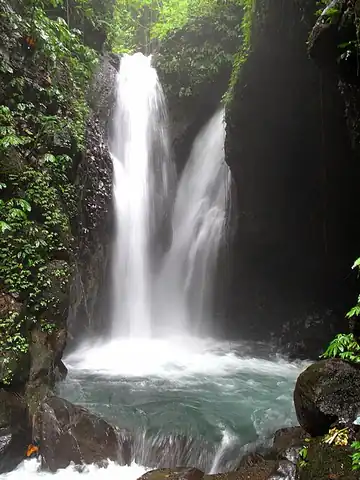
One of Bali's longest-established tourist waterfalls