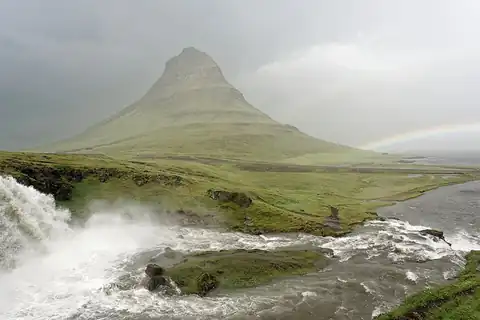
Waterfalls are one of the few subjects where the camera can show something your eye never sees. Hold the shutter open and moving water turns to silk; cut it short and every droplet hangs in the air. Neither is right. The choice is what makes the picture yours.
Shutter speed is the whole game
| Shutter | What the water does | Works for |
|---|---|---|
| 1/1000 s and faster | Frozen — individual drops and texture | Huge-volume falls (Victoria, Iguazú, Niagara), people in spray, boats |
| 1/60 – 1/15 s | Some motion blur, still has weight | Handheld in shade; keeps big falls looking powerful |
| 1/4 – 1 s | Smooth, streaked, still readable | The classic look for most falls; needs support |
| 2 – 30 s | Mist-like, pools go glassy | Small tiered falls, cascades, streams in forest |
Two rules of thumb. The bigger the waterfall, the faster you can go and still get a sense of movement — a thundering curtain looks mushy at two seconds. And the smaller the stream, the longer it can take before it loses all definition.
Steadiness without a tripod
Many viewpoints — especially boardwalks at Plitvice or the catwalks at Iguazú — are crowded, and some parks don't want tripods on narrow paths. Brace the camera on a rail, a rock or a folded jacket, use the two-second self-timer so pressing the shutter doesn't shake it, and shoot several frames. A small bean bag or a clamp-style mini tripod earns its weight on any waterfall trip.
Filters that actually help
- Circular polariser. The single most useful filter here. It cuts glare on wet rock and leaves, deepens greens and lets you see into clear pools. It also takes one to two stops of light away, which nudges your shutter slower.
- Neutral density (ND). In daylight you usually can't get a half-second exposure without overexposing. A 3-stop or 6-stop ND lets you. A 10-stop is for streams and rivers rather than big falls.
Phones do the long-exposure trick in software: on iPhone, Live Photo → Long Exposure; many Android cameras have a "motion" or "long exposure" mode. Brace the phone the same way.
Light
Overcast days are waterfall days. Flat light keeps white water from blowing out and saturates forest greens. On sunny days, falls in deep gorges are often half in hard shadow and half in glare — go early or late, when the whole scene is in shade.
The exception is when you want a rainbow. A rainbow forms opposite the sun, at about 42° from the point directly opposite it, so you need the sun behind you and fairly low. Morning is best for falls facing west, afternoon for falls facing east. At Victoria Falls and Iguazú rainbows in the spray are close to guaranteed on a sunny day in the right half of the day. After dark the same geometry gives you a moonbow.
Spray
High-water falls throw enough water to soak you and your gear within a minute. Carry a microfibre cloth in a sealed bag, a rain cover or even a clear shower cap for the camera, and shoot with the lens hood on. Compose with the lens cap on, then take it off, fire, and cover it again. Change lenses well away from the spray. If a dry-season visit is an option, the photographs are often clearer: at Victoria Falls, the view from the Zimbabwe side in April can be a white wall of mist.
Scale
Waterfalls photograph smaller than they are. Something of known size — a person on a viewpoint, a boat at the base, a tree on the lip — tells the viewer how big the thing is. The Maid of the Mist boats at Niagara do this job for you. So do the tiny figures on the rim at Kaieteur.
Drones
Launching, landing or operating a drone is prohibited in United States national parks, and many other parks around the world — including several of the famous falls in this index — ban or permit-restrict them too. Where they are allowed, rules on height, distance from people and wildlife still apply. Check the park's own rules for the specific site before you fly, not a forum post; and if you want the aerial view without the paperwork, a helicopter or scenic flight is the legal way to get it.
Don't die for the shot
Wet rock near a waterfall is the most slippery surface most people will ever stand on, and a surprising share of waterfall accidents involve someone stepping past a barrier for a better angle. The view from the railing is the view. See waterfall safety.
Where to go for pictures
For variety of angles in one day: Iguazú. For clean graphic shapes: Skógafoss, Kirkjufellsfoss and Svartifoss in Iceland. For colour: the travertine pools of Kuang Si, Havasu and Plitvice. The full list of falls tagged for photography is at photography.