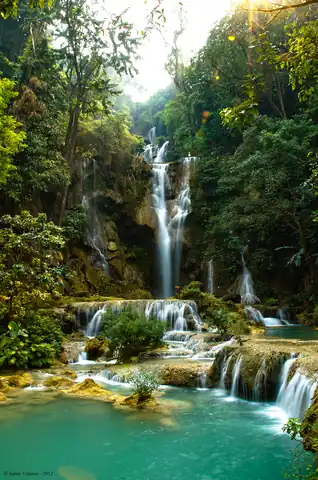
The risks at a waterfall rarely look like risks. The rock at the edge looks dry. The pool at the base looks calm. The stream above looks shallow. Almost every hazard below comes down to the same thing: water behaving differently from how it appears.
1. Wet rock and algae
Spray keeps rock permanently damp, and damp rock grows a thin film of algae that can be as slippery as ice — sometimes on a surface that looks perfectly dry. This is the most common way people get hurt at waterfalls. Stay on built paths, wear shoes with real tread (not sandals), keep your hands free on steps and ladders, and treat any dark, smooth or green-tinged surface as if it were ice.
2. The top of the falls
Streams above a waterfall are deceptively fast, and a knee-deep current is enough to knock an adult off their feet. Never wade above the lip of a fall, and never step past a barrier at the top for a photograph. Where you can stand at the edge — Devil's Pool at Victoria Falls is the famous example — it is only in specific low-water months, with a licensed guide, in a spot where a natural rock wall holds you back.
3. The pool at the base
Water falling into a pool drives down, spreads along the bottom and comes back up and around toward the falls. That recirculating current — often called a hydraulic or a "washing machine" — can hold a swimmer under or drag them back into the falling water. It is strongest directly under big volumes and can be invisible from the surface.
- Only swim where swimming is explicitly permitted, and read the signs; several famous pools, including Plitvice, ban it outright.
- Stay well away from where the water lands. The calm, clear water downstream is where people swim at places like Kuang Si or Havasu.
- Don't jump. Plunge pools have hidden rock, logs and shelves, and their depth changes with every flood.
- After heavy rain, don't swim at all.
4. Cold water
Many waterfalls are fed by snowmelt or springs, and the water can be far colder than the air. Sudden immersion in cold water triggers a gasp reflex and fast breathing within the first minute — dangerous if your head is underwater — and saps strength quickly after that. Enter slowly, stay close to where you can stand, and get out before you feel you need to.
5. Flash floods
A thunderstorm miles upstream can send a surge down a canyon under a clear sky. Slot canyons and desert washes are the highest-risk places; Havasu Canyon has been evacuated for floods during the summer monsoon. Check the forecast for the whole catchment, not just where you are standing, and if the water suddenly rises, turns muddy or starts carrying debris, climb to high ground immediately.
6. Rockfall and ice
Waterfalls exist because the cliff is eroding. Rock falls from the walls of gorges, and in winter, sheets and columns of ice fall from frozen falls. Don't linger directly under cliffs, obey closures of lower paths — at Gullfoss the lower trail shuts in icy conditions — and wear a helmet for anything involving ropes.
7. Remote approaches
Some of the greatest falls are a long way from help: a multi-day trek, a river journey, a charter flight. Tell someone your plan, carry more water than you think you need, turn back on time, and in hot places start before dawn. For the hardest approaches, a local guide is a safety decision, not a luxury.
Booking adventures
Bungee, gorge swings, rafting and canyoning are safe in the hands of well-run operators and dangerous in the hands of poor ones. Before you book:
- Book a named, established operator — the ones listed in our full guides — rather than whoever is cheapest on the day.
- Ask what's included in the safety briefing, what the equipment is and how old it is, and whether guides are certified (rafting and canyoning have recognised qualifications).
- Check that your travel insurance covers the specific activity; many policies exclude bungee, skydiving or grade 5 rafting unless you add them.
- Respect the season: rafting stops at high water for a reason. Our guides say which months each activity actually runs.
The short version
Stay behind barriers. Wear real shoes. Swim only where it's allowed, and never under the falling water. Watch the sky upstream. And when in doubt, the view from the railing is the view.
Next: why waterfalls form where they do, or waterfalls where swimming is part of the visit.