
Asia
Waterfalls in Indonesia
12 waterfalls, from Tumpak Sewu to Madakaripura Waterfall — at their best April to June.
Indonesia's waterfalls here cluster on two volcanic islands, both shaped by heavy monsoon rain on steep, porous ground. Tumpak Sewu, in East Java, drops as a wide amphitheatre of parallel streams off a cliff fed by the slopes of Semeru, one of the country's most photographed falls and increasingly its most crowded. Bali's falls sit inland from the tourist coast, in wetter highland districts: Sekumpul, often ranked the island's most striking, drops in multiple strands into a jungle gorge; Gitgit is one of Bali's longest-established tourist stops; and Nungnung, one of the island's tallest, sees far fewer visitors thanks to a steep staircase approach that discourages casual day-trippers.
When to go
The wet season, roughly November-March, brings the heaviest flow and the most dramatic volume at Tumpak Sewu and Bali's falls, though trails can turn slippery and river crossings more hazardous. The dry season, April-October, offers easier, safer access and clearer water, if a somewhat thinner flow.
Getting around
Tumpak Sewu requires a drive from Malang followed by a steep, sometimes muddy descent into the gorge, best done with a local guide. Bali's falls are reachable by hired car or scooter from Ubud or the north coast, though Sekumpul and Nungnung both involve several hundred steps down and back up.
Entry requirements
US, UK, Canadian and EU citizens can get a visa on arrival (500,000 IDR, about US$28, 30 days, extendable once) at major airports, or apply for an e-visa in advance; all arrivals also complete the All Indonesia arrival card online.
Entry rules checked September 2026. They change without much notice — confirm with the official government source before you travel.
12 destinations
Every waterfall in Indonesia
 Full guide
Tumpak Sewu
One of Indonesia's most dramatic amphitheatre waterfalls

Curug Cipendok
Curug Cipendok is a waterfall in the southern part of Central Java. It is in Cilongok Banyumas , near the…
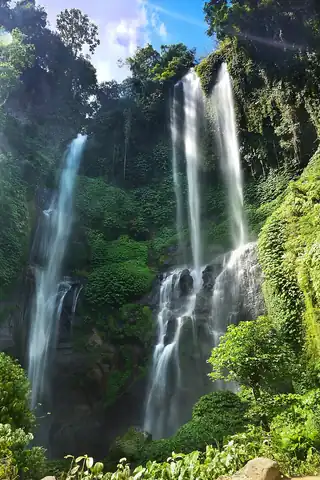
Sekumpul Falls
Often ranked Bali's most beautiful waterfall

Cikaso Waterfall
Cikaso Waterfall is a dramatic waterfall on the Cikaso River in Western Java. Cikaso Waterfall is on the…
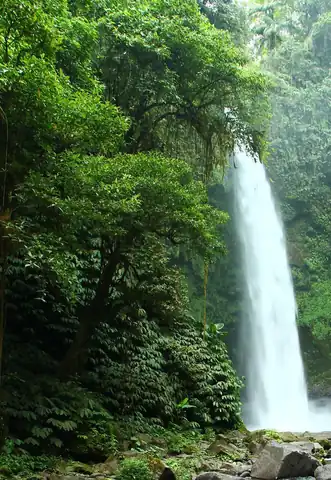
Nungnung Falls
One of Bali's tallest and least-crowded major waterfalls

Telun Berasap Falls
Telun Berasap Falls is a waterfall found in Kerinci Regency, Jambi province, Indonesia. Its height is…
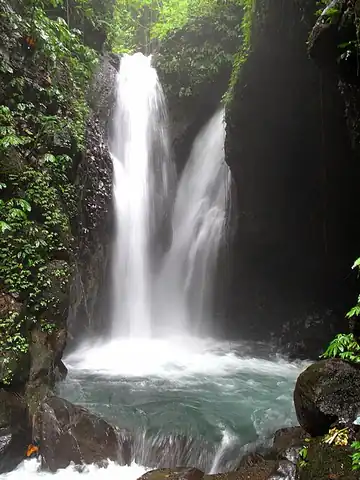
Gitgit Falls
One of Bali's longest-established tourist waterfalls

Jumog waterfall
Jumog Waterfall is a waterfall in Berjo Village,Ngargoyoso District, in the Karanganyar Regency in Central…

Sipisopiso
The Sipiso-piso is a plunge waterfall in the Batak highlands of Sumatra, Indonesia. It is formed by a small…

Tegenungan Waterfall
Tegenungan Waterfall is a waterfall in Bali, Indonesia. It is located at the village of Tegenungan Kemenuh…

Sedudo Waterfall
Sedudo waterfall is situated in the Ngliman village, Sawahan district, within Nganjuk Regency, East Java…

Madakaripura Waterfall
Madakaripura Waterfall is a waterfall in Indonesia.