
Asia
Waterfalls in Japan
44 waterfalls, from Nachi Falls to Hiji Falls — at their best May to July and October to November.
Japan's classic waterfalls are tied to religious and cultural sites as much as scenery. Kegon Falls, in Nikko, drops from Lake Chuzenji through a volcanic gorge and is one of the country's three great waterfalls, reached by an elevator down to a viewing platform at its base. Nachi Falls, on the Kii Peninsula, is Japan's tallest single-drop waterfall and has been worshipped as a Shinto deity for centuries, forming part of the Kumano Kodo pilgrimage route alongside a shrine built to face it directly. Fukuroda Falls, in Ibaraki, completes the traditional trio and is unusual for changing character across four distinct rock terraces.
When to go
Kegon and Fukuroda are at their most visited in autumn, October-November, when surrounding maples turn colour, and in late spring as snowmelt swells the flow. Winter can partly freeze Fukuroda's terraces into an ice formation that draws its own visitors; Nachi, fed by more consistent rainfall on the Kii Peninsula, runs steadily through most of the year.
Getting around
All three falls are reachable by train from Tokyo or Osaka followed by a local bus: Kegon via the Tobu Nikko line, Nachi via JR to Kii-Katsuura, and Fukuroda via JR Mito and a local bus. A rental car adds flexibility around Nikko and the Kii Peninsula but is not required for any of the three.
Entry requirements
US, Canadian, UK, and EU citizens currently enter Japan visa-free for up to 90 days; a planned electronic authorisation (JESTA) is not expected before 2028.
Entry rules checked September 2026. They change without much notice — confirm with the official government source before you travel.


41 more
The rest of the Japan index
Compiled from open data and labelled as such on each page.
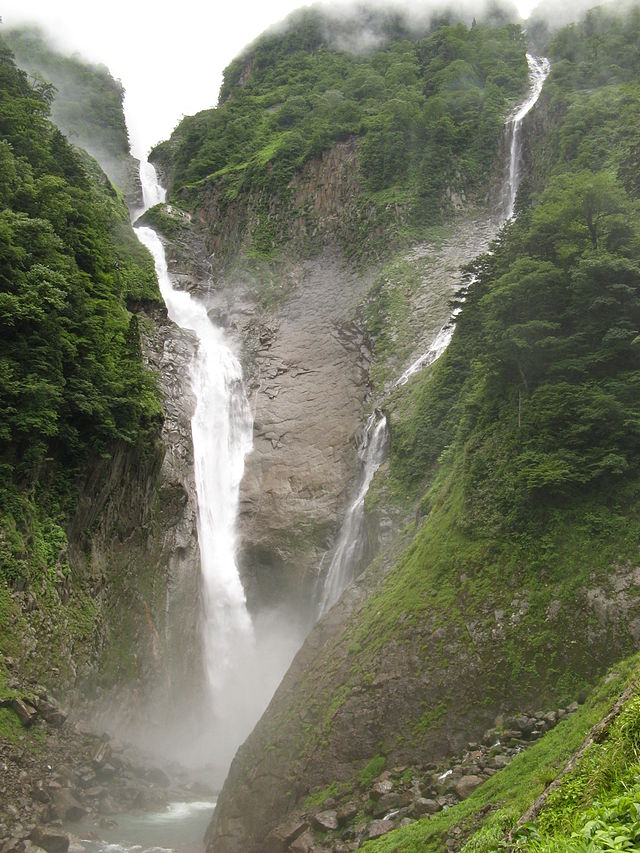 Hannoki FallsJapan · Toyama Prefecture · 497 m
Shōmyō FallsJapan · Ashikuraji · 350 m
 Ryūzu FallsJapan · Nikkō-shi · 210 m
 Sankai FallsJapan · Zaō-machi · 181 m
 Namekawa Great FallsJapan · Yonezawa · 100 m
Chagama FallsJapan · Kazuno · 100 m
 Nanatsu FallsJapan · Tsuruoka · 100 m
 Shasui FallsJapan · Kanagawa Prefecture · 90 m
 Abe Great FallsJapan · Aoi-ku · 80 m
 Nanataki FallsJapan · Akita Prefecture · 60 m
 Yasu FallsJapan · Kitaakita · 60 m
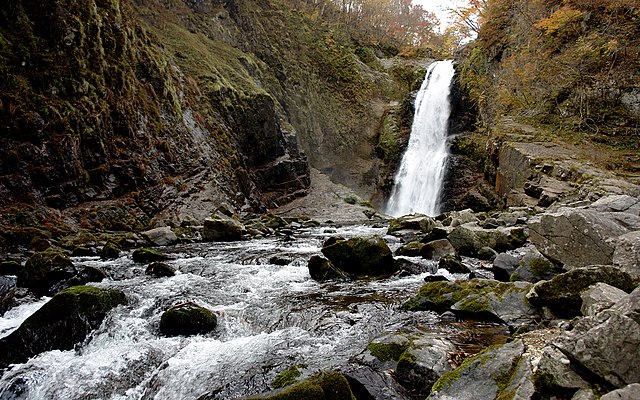 Akiu Great FallsJapan · Akiu · 55 m
 Hayato Great FallsJapan · Midori-ku · 50 m
 Ogawa FallsJapan · Kagoshima Prefecture · 46 m
 Kitashōji FallsJapan · Hokuto · 35 m
 Otodome FallsJapan · Fujinomiya · 25 m
 Shiraito Falls (Fujinomiya)Japan · Fujinomiya · 20 m
 Harajiri FallsJapan · Bungo-ōno-shi · 20 m
 Nabegataki FallsJapan · Oguni · 10 m
Jōren FallsJapan · Izu
 Yuhi FallsJapan · Minamiashigara
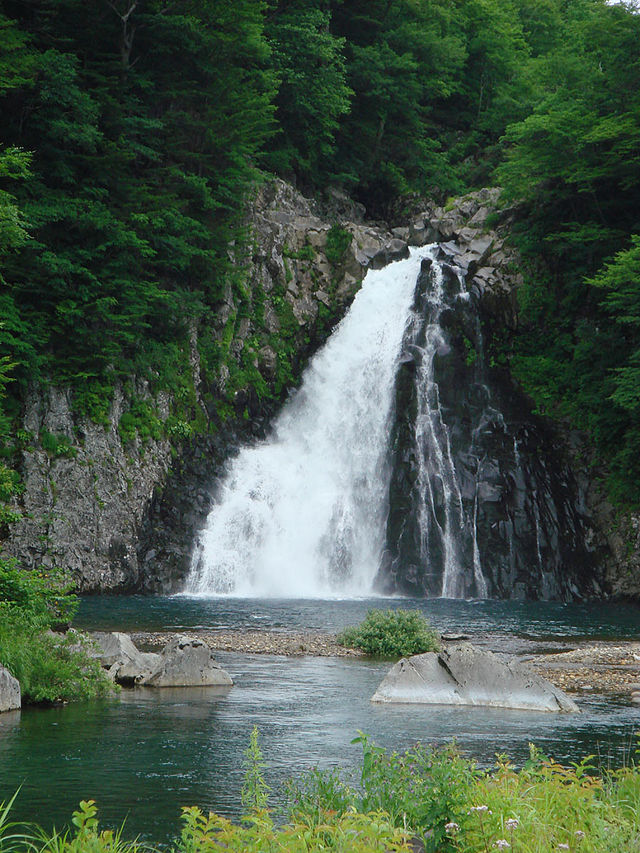 Hottai FallsJapan · Yurihonjo
 Nunobiki FallsJapan · Fukiai-chō
 Yōrō FallsJapan · Yōrō-chō
 Fudō FallsJapan · Hachimantai
 Matsumi FallsJapan · Aomori Prefecture
 Hagi FallsJapan · Gifu
 Kurokuma FallsJapan · Ajigasawa
Sanjō FallsJapan · Hinoemata
 Senga FallsJapan · Kofu
 Shinjuku Niagara FallsJapan · Nishi-Shinjuku
 Fukiware FallsJapan · Numata
 Shiraito Falls (Tozawa)Japan · Tozawa
 Yonako FallsJapan · Suzaka
 Atera Seven FallsJapan · Aichi Prefecture
 Chinda FallsJapan · Bungo-ōno-shi
 Kamuiwakka FallsJapan · Shari
 Naso FallsJapan · Akita Prefecture
 Ryūsō FallsJapan · Ikeda
 Nōmizo FallsJapan · Kimitsu
 Hiji FallsJapan · Okinawa Prefecture