
Asia
Waterfalls in China
10 waterfalls, from Ban Gioc-Detian Falls to Bride's Pool — at their best June to September.
China's major waterfalls are spread across very different landscapes. Huangguoshu Falls, in the karst hills of Guizhou, is the country's largest and anchors a national park of connected falls and caves. Hukou Falls, on the Yellow River between Shaanxi and Shanxi, is the world's largest yellow-water waterfall, carrying the river's characteristic loess silt through a narrow rock gorge. Ban Gioc-Detian Falls, on the Guangxi border with Vietnam, is Asia's largest transnational waterfall and is viewed from both countries, divided by a shared border river. Nuorilang Falls, in Sichuan's Jiuzhaigou Valley, is the widest fall in a UNESCO-listed valley better known for its turquoise lakes than its waterfalls.
When to go
Summer monsoon rain, roughly June-September, brings peak flow to most of these falls, Hukou and Huangguoshu included, though Hukou can also flood dramatically with ice break-up in early spring. Jiuzhaigou's Nuorilang Falls is also scenic through autumn, when the surrounding forest turns colour, and can partly freeze in winter.
Getting around
Huangguoshu and Jiuzhaigou are reached via regional airports followed by a bus or hired car into the park, with Jiuzhaigou requiring its own internal shuttle system. Hukou Falls is accessible by road from Yan'an or Linfen. Ban Gioc-Detian is a multi-hour drive from Nanning, and reaching the Vietnamese side of the falls requires a separate border crossing.
Entry requirements
China's 30-day visa-free scheme covers UK and Canadian citizens (added February 2026) and most EU nationals, and currently runs to 31 December 2026; US citizens still need a visa.
Entry rules checked September 2026. They change without much notice — confirm with the official government source before you travel.
10 destinations
Every waterfall in China
 Full guide
Ban Gioc-Detian Falls
Asia's largest transnational border waterfall
 UNESCO
Nuorilang Falls
Widest waterfall in the UNESCO-listed Jiuzhaigou Valley

Dadieshui Waterfall
Dadieshui Waterfall , is a waterfall in China located on the Bajiang River in Kunming, Yunnan province. It is…

Huangguoshu Falls
China's largest waterfall

Changbai Waterfall
Changbai Waterfall is a 68 m -tall alpine waterfall in Northeast China, located to the north slope of the…
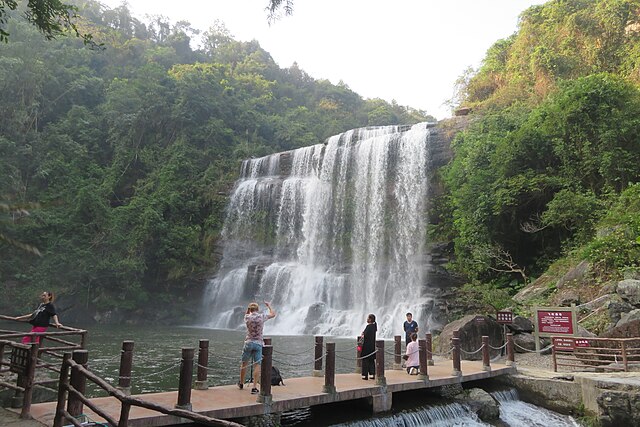
Huangmanzhai waterfalls
The Huangmanzhai waterfalls are five waterfalls in Jiexi County, Jieyang, Guangdong, China. The main…

Hukou Falls
The largest waterfall on the Yellow River, and the world's biggest yellow one
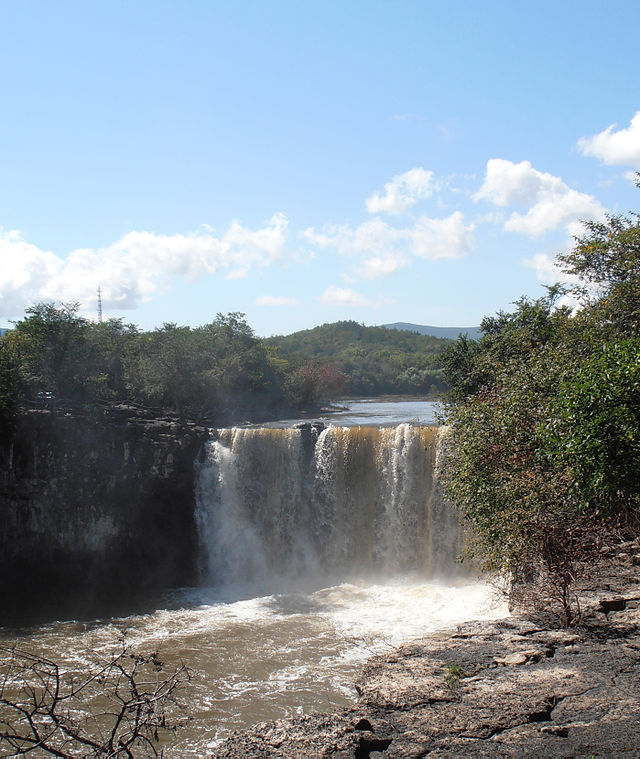
Diaoshuilou Falls
The Diaoshuilou Falls are a 40-metre wide waterfall in Heilongjiang Province, People's Republic of China at…

Yuntai Mountain
The Yuntai Mountain is a part of the Taihang Mountains, situated in Xiuwu County, Jiaozuo, Henan Province of…

Bride's Pool
Bride's Pool is a waterfall in China.