
North America
Waterfalls in Mexico
12 waterfalls, from Piedra Volada to El Salto — at their best January to February and October to December.
Mexico's falls here span very different climates and landscapes. Agua Azul, in Chiapas, is a long series of travertine cascades and pools coloured a distinctive turquoise-blue by dissolved calcium carbonate, set in tropical rainforest near the Palenque ruins. Tamul Falls, in the Huasteca Potosina region of San Luis Potosi, is reached along a river where two waterways meet in contrasting colours before the wider Tamul drop itself, a boat trip as much as a hike. Basaseachic Falls, in the Sierra Tarahumara of Chihuahua, is Mexico's second-tallest waterfall, a single plunge into a canyon within the dramatic Copper Canyon region, far drier and more remote than the southern falls.
When to go
The rainy season, roughly June-October, brings the fullest, most turbid flow to Agua Azul and Tamul, sometimes turning Agua Azul's water from turquoise to brown after heavy rain. The dry season, November-April, offers clearer water and easier access, though Basaseachic, fed by a smaller mountain catchment, is generally most impressive just after the rains, July-September.
Getting around
Agua Azul is a stop on the common overland route between Palenque and San Cristobal de las Casas, reachable by tour van or bus. Tamul Falls typically requires a boat trip up the Rio Santa Maria from the village of Tanchachin. Basaseachic is reached by a several-hour drive from Chihuahua or Creel, with the final approach on foot.
Entry requirements
US, Canadian, UK, and EU citizens enter visa-free with a tourist card (FMM), issued on arrival or with the airfare, generally valid for up to 180 days.
Entry rules checked September 2026. They change without much notice — confirm with the official government source before you travel.
12 destinations
Every waterfall in Mexico

Piedra Volada
Piedra Volada Falls is a 453-meter-tall plunge waterfall that forms seasonally in the Barranca Candameña of…

Basaseachic Falls
Mexico's second-tallest waterfall

Tamul Falls
One of Mexico's tallest and widest waterfalls

Basaltic Prisms of Santa María Regla
The Basaltic Prisms of Santa María Regla are tall columnar joints of basalt rock near Huasca de Ocampo in the…

Eyipantla Falls
Eyipantla Falls is a waterfall located in the Los Tuxtlas region of southern Veracruz in Mexico. It is forty…

Misol Há
The Cascada de Misol-Há is a waterfall located in the Municipality of Salto de Agua, 20 kilometers from…

Agua Azul
One of Mexico's most photographed natural swimming spots

Cola de Caballo
Cola de Caballo is a waterfall about 25 m , in the town of Villa de Santiago, Nuevo León. It is open to the…
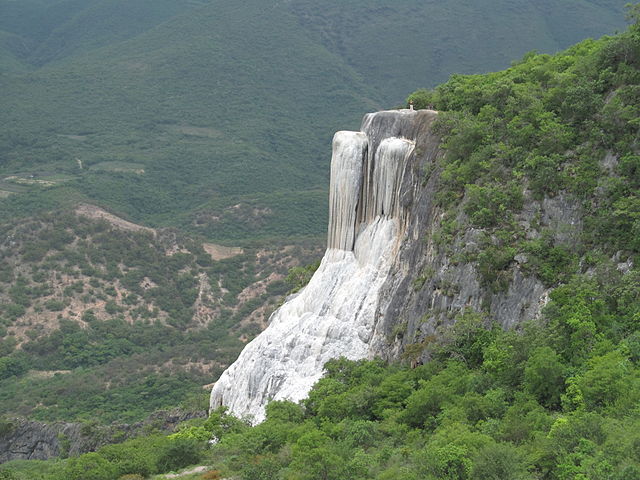
Hierve el Agua
Hierve el Agua is a set of natural travertine rock formations in San Lorenzo Albarradas, Oaxaca, Mexico that…
Cascada de Texolo
Cascada de Texolo is a waterfall of eastern Mexico. It is located 3 kilometres south of the town of Xico, in…
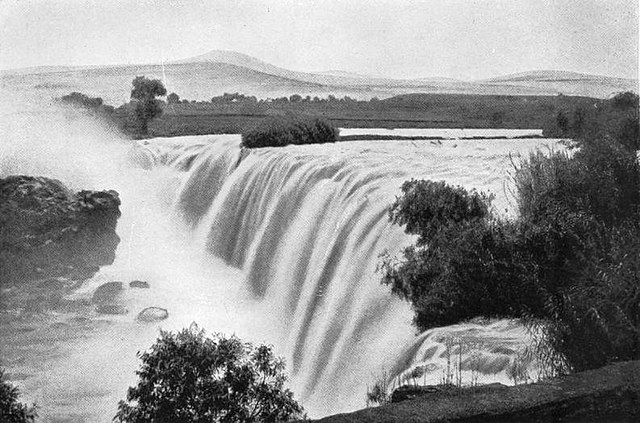
Juanacatlán Falls
Juanacatlán Falls is a waterfall on the Santiago River in the Mexican state of Jalisco, once known as the…

El Salto
El Salto is a rock climbing area in the Nuevo León, Mexico. The climbing area is near to Ciénega de González…