Lonely Planet FijiLonely Planet
Guidebook
Lonely Planet Fiji
Lonely Planet · 2023
Covers Taveuni and Bouma National Heritage Park, where the Tavoro Falls trail begins.
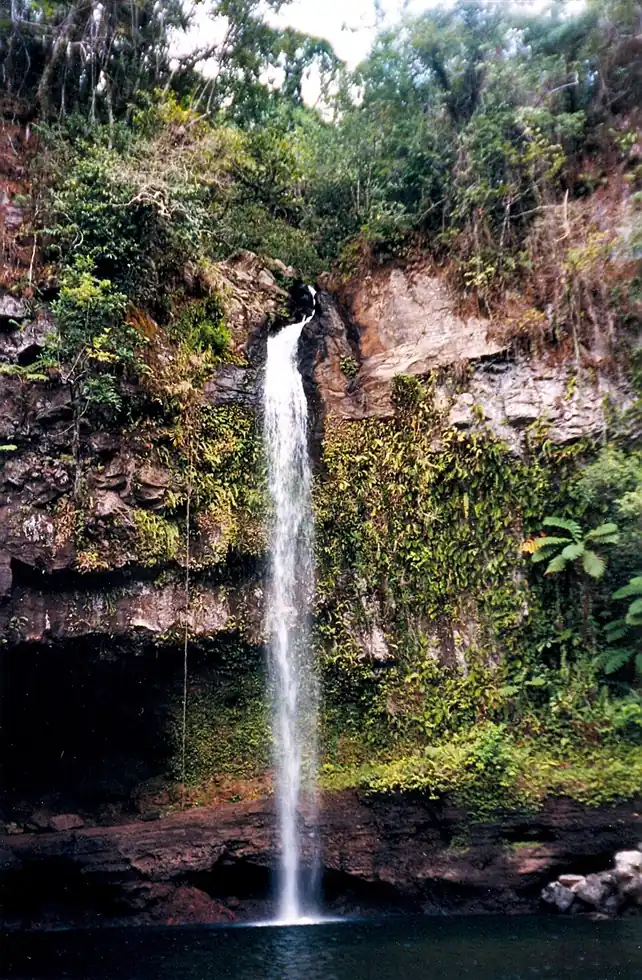
Fiji · Taveuni
Three swimmable falls stacked up a rainforest valley in Bouma National Heritage Park, on the wet eastern side of Fiji's Garden Island. The first is a ten-minute stroll; the third is a muddy, rope-assisted scramble that most visitors never reach.
Full guide Checked September 2026 by David Bussell · 41 sources
Tavoro, also called the Bouma Falls, is not one waterfall but three, strung one above another along the same stream as it drops off the volcanic spine of Taveuni towards the east coast. The lowest and best known falls about 24 metres over a dark basalt lip into a wide, deep plunge pool ringed by lawn and forest. Above it, the middle fall drops roughly 15 metres and the upper fall about 10 metres, each into its own pool. The eastern side of Taveuni catches the south-east trade winds and some of the heaviest rain in Fiji, so the stream rarely runs thin.
You experience Tavoro from the bottom up. You sign in and pay at the visitor centre beside the coast road near Bouma village, then follow a short, partly concrete path through gardens to the first fall, where there are changing rooms, picnic tables and barbecues. From there the trail turns into a proper rainforest walk: about 30 to 40 minutes of climbing, rock-hopping and at least one rope-assisted stream crossing to the middle fall, then another 20 to 40 minutes to the upper fall. The whole circuit with swims takes most people two and a half to four hours.
Tavoro is the centrepiece of Bouma National Heritage Park, a community-run reserve on land owned by the villages of the north-east coast, and it pairs naturally with the park's other two draws: the Lavena Coastal Walk to the twin Wainibau Falls, and the snorkelling reef at Waitabu Marine Park. Across the island in the Somosomo Strait lies Rainbow Reef, one of the best-known soft-coral dive areas in the world. A few days on Taveuni can mix waterfall swims in the morning with some of the South Pacific's best diving in the afternoon.
There's no tour to book here — you go independently. Sort the bed and the transport, then read on for how the visit works.
Visitor centre on the coast road near Bouma village
The heart of the park and the reason most people drive round the island. The first fall is an easy, gardened ten-minute walk with a big pool, changing rooms and picnic tables, so families can stop there and still have a good day. Above it, the trail gets steep, rocky and slippery, with a rope-assisted stream crossing on the way to the middle fall and a quieter forest walk to the upper fall. Snorkellers at the top pool report hundreds of freshwater prawns.
Lavena village, at the end of the east coast road
The park's second trail starts where the road runs out, at Lavena village, and follows the shoreline past black-sand beaches, village gardens and streams for about five kilometres before turning up a gorge to Wainibau Falls. You see one fall from the pool; swim through a short channel and a second fall appears in an inner chamber. There is one river crossing, left without a bridge since a 2016 cyclone, which can be waist-deep after rain. Village boats also run tours to waterfalls along the coast.
Waitabu village, about 17.5 km south of Matei
A village-managed marine protected area where fishing has been banned since 1998, and the most accessible good snorkelling on the Bouma coast. You do not just swim out: the village runs guided snorkel tours, and a longer cultural experience that adds tea, entertainment and a ride on a traditional bilibili bamboo raft. There is also a small campground by the water. Book ahead through the visitor centre, because tours depend on tides and guides.
If you only have half a day, do Tavoro: the first fall alone justifies the drive, and fit walkers should push on to the upper pool. With a full day, pair Tavoro in the morning with the Lavena Coastal Walk in the afternoon, as recent visitors recommend, and keep Waitabu for a separate low-tide slot.
May to October brings drier trails and the clearest diving; November and April are workable, and December to March can cut off the upper falls after heavy rain.
Rain decides how far up the valley you can get. Taveuni's east coast is one of the wettest places in Fiji, and in the November – April wet and cyclone season the trails to the upper falls can turn slick or be cut off.
The easiest conditions of the year: cooler, less humid air, firmer trails to the middle and upper falls, and the Lavena river crossing at its most manageable. It is also the best time for diving, with visibility and surface weather peaking from May to September. It still rains on the east coast, so expect the odd downpour, but the pools stay full because the stream never really dries.
The start and tail of the wet season. Warmer water, greener forest and fewer visitors, with a real chance of heavy showers that make the rock-hops above the first fall hard going. Cyclone season formally runs from November to April, so keep plans flexible and check forecasts. Flights and resorts are often easier to book than in the July – September peak.
Hot, humid and very wet. The falls are at their fullest and loudest, but the stream crossings rise, the rocks get slippery, and the paths to the last two falls can be cut off. Rivers on the Lavena walk can run waist-deep. Tropical cyclones are possible and can close airports, ferries and roads for days. Come for the power of the water and stay near the first fall.
Rainbow Reef's most famous dive, the Great White Wall, is a drop-off blanketed in pale soft coral that only looks its best when the current is running to feed it, and it can only be dived safely on a slack tide. Dive shops plan it around the lunar calendar, and divers report that only a few days a month work well. If it matters to you, ask your dive operator for their optimum dates before you book flights.
Park and village fees are the Fijian-dollar rates reported by 2025–2026 guides and visitors, converted at about FJD 1 = $0.445 (September 2026); some tour and transport prices date from 2023 and are marked as such. Hotel prices are 2026 aggregator listings or Tripadvisor ranges and move with season and meal plan. Treat every figure as a planning guide, not a quote.
The classic Taveuni day. A short garden path leads to the 24-metre lower fall and its wide swimming pool, with changing rooms and picnic tables. Keep going and the trail climbs through rainforest, with rock-hopping and a rope-assisted stream crossing, to the 15-metre middle fall, then on to the 10-metre upper fall and its quieter pool. The trail is well marked and a guide is not required, but do not go alone, and wear shoes with real grip.
Year-round; upper trails best May – October
Pay on the day — nothing to book in advance.
About five kilometres each way along the coast from the end of the road, past beaches, gardens and streams, to Wainibau Falls at the head of a narrow gorge. Swim a short way in and a second fall appears in an inner pool. One river crossing has had no bridge since a 2016 cyclone, and the rocks are rounded and slippery. A 2024 reviewer found one section easy to lose, so a village guide is worth the small fee.
Best May – October; river crossing can be waist-deep after rain
Pay on the day — nothing to book in advance.
Instead of walking, take a village boat south along the coast, where several falls drop almost straight into the sea or into short gorges you swim up to. Longer versions reach more remote falls inside the island. A May 2026 reviewer described a guide taking the group to jump from one of the falls. It is the best way to see this coast if you are not up to the walk, but it costs much more than the trail fee.
Calm-sea days, mostly May – October
No booking needed.
A guided snorkel over a reef the village closed to fishing in 1998, now one of the healthiest shallow reefs you can reach from the shore on this coast. The cultural version adds tea, songs and a ride on a bilibili, a traditional bamboo raft. Tours run with village guides and depend on the tide, so call ahead through the park or your resort rather than turning up. The fee goes straight to the community that protects the reef.
Year-round, timed to the tide
No booking needed.
Rainbow Reef lies across the Somosomo Strait, between Taveuni and Vanua Levu, where tidal currents pump nutrients through walls, bommies and tunnels coated in pink, orange and purple soft coral. The Great White Wall drops from about 15 to over 60 metres under a layer of pale soft coral and needs a slack tide. Currents are strong but predictable, so this is diving for the confident. Manta rays pass through in the May – October winter months.
Year-round; best visibility May – September
No booking needed.
The 180° line of longitude runs straight through Taveuni, and a marker board near Waiyevo on the west coast lets you stand with one foot in each hemisphere. It is not where the date changes: the International Date Line bends east around Fiji so the whole country keeps one date and one time zone. That makes it a good photograph and a better trivia question. Combine it with the Wairiki Catholic Mission, built in 1907, a short drive south.
Year-round
No booking needed.
A roughly 200-metre run of smooth rock in a stream above Waiyevo, which local children slide down on their backsides into a series of pools. The walk up takes 20 to 30 minutes. It is fun and entirely unmanaged, so watch where locals go before you try it, check the landing pools for depth, and skip it when the stream is high. A cheap, easy add-on to the meridian marker on the same stretch of coast.
Best with moderate flow; dangerous after heavy rain
No booking needed.
The park's longest trail climbs from the coast into the forested interior behind Bouma, and must be done with a local guide. It is the best way into the island's rainforest proper, with a strong chance of birds you will not see near the coast. Arrange it in advance through the park or your resort, and bring more water than you think you need: it is long, humid and muddy.
Best May – October
No booking needed.
At 1,195 metres, Des Voeux Peak is the highest point on Taveuni you can reach by vehicle, via a steep, rough track that usually needs a 4WD, followed by a short walk. On a clear morning you look across the Somosomo Strait to Vanua Levu. The forest around the summit is one of the island's best birding spots, and August and September bring nesting season. Go early, before cloud builds on the ridge.
Clearest views May – October; birding best August – September
No booking needed.
A crater lake at about 800 metres in the island's volcanic interior, half-covered in floating vegetation and home to the tagimaucia, a red and white climbing flower found almost nowhere else and a national symbol of Fiji. The trail is steep, muddy and often in cloud, and you need a local guide. It is a serious day out for fit hikers, not a side trip after the falls.
Best May – October
No booking needed.
A small working pearl farm in the Wailoa lagoon on the north-east coast, a short drive from Matei. The tour explains how the oysters are seeded and grown, and takes you out over the lines. It is a good calm-water option for a rainy afternoon or a day when you are not up to the Bouma trails, and pearls are on sale at the end.
Year-round; Monday – Thursday at 2pm
Pay on the day — nothing to book in advance.
Bouma National Heritage Park is owned and run by the surrounding villages, and the fees fund local services and, at Lavena, university scholarships. The park accepts only Fijian dollars in cash, with no cards and no ATMs, and the only bank ATM on the island is in Naqara. Cover your swimwear with a shirt or sulu when passing through villages. Lonely Planet advises against hiking to the upper falls alone because the valley is isolated, and rocks above the first fall get very slippery. Canada notes several drownings from riptides along Fiji's reefs and river mouths, so check with locals before swimming off the coast.
Most visitors sleep in the resort strip around Matei, near the airport and about an hour from Bouma, or near Waiyevo on the west coast for the quickest boat ride to Rainbow Reef; offshore islands add high-end hideaways.
A family-owned clifftop resort of around 13 bures, run for more than 30 years, with farm-to-table meals, a spa and wide ocean views. Rated 4.8 on Tripadvisor from more than 440 reviews and listed as all-inclusive.
Sixteen oceanfront bures on an old lava flow at the island's southern tip, with meals included, its own dive centre with two boats, and shore diving straight off the rocks. Rated 4.7 from more than 600 reviews, the latest in July 2026.
An adults-only private island of around 14 bures, including treehouse bures, with an infinity pool and in-house diving and snorkelling. It runs guided Bouma trips on Thursdays and charges FJD 265 (~$118) per person for the boat-and-car transfer.
Sixteen bures on an island a short boat ride from Taveuni's north coast, with a rainforest spa, beachside massages and dive packages to Rainbow Reef. Current rates were not published in the sources checked.
Around 30 rooms plus shared dorms on the west coast, with an on-site dive shop and the shortest boat ride to Rainbow Reef. Children under 15 stay free with two adults, and the 180th meridian marker is close by.
A family-run eco resort powered by solar, wind and water, with the Cliffhouse restaurant, a 12-metre pool, and the Taveuni Ocean Sports dive shop run by the owners' daughter. Rated 4.9 on Tripadvisor from about 400 reviews.
Just three cottages a few steps from a quiet sand beach with good snorkelling on the house reef, close to Matei's dive shops and restaurants. Rated 4.9 on Tripadvisor from more than 700 reviews; a 2024 Travellers' Choice winner.
A lodge near the airport with a pool, gym, restaurant and airport transfers, and the cheapest well-reviewed option in the Matei strip. Guests praise the staff and the food; rooms are simpler than the resorts nearby.
A village campground of about 12 tent sites at the water's edge inside the marine park, a few minutes from Tavoro. The simplest way to wake up on the Bouma coast and be first at the falls.
A basic village lodge at the start of the Lavena Coastal Walk, reported at FJD 30 a person a night in 2023. It lets you walk to Wainibau Falls at first light and do Tavoro the same afternoon.
Search all Taveuni accommodation
At the island's northern tip, beside the Matei resort strip and about 45–60 minutes by road from the Bouma visitor centre. Fiji Airways, operating as Fiji Link, flies from Nadi (about 1 hr 20 min, roughly twice daily) and Suva (about 1 hr, a few times a week) on small propeller aircraft. Fares from Nadi start around FJD 285 (~$127) one way.
Fiji's main international gateway on Viti Levu, with Fiji Airways and partner flights from Los Angeles, San Francisco, Australia, New Zealand and Asia. Connect here to Fiji Link for Taveuni, allowing plenty of time between flights.
The capital's airport, on Viti Levu's east side. Fiji Link flies from here to Taveuni in about an hour, less often than from Nadi.
Nadi is the gateway for almost everyone, with connections from North America, Australia and New Zealand onto Fiji Link's domestic flights to Matei.
Taveuni has no road link, but you can reach it by sea. The short crossing runs from Buca Bay or Natuvu on Vanua Levu, about 90 minutes to two hours by ferry, with Goundar Shipping, the Taveuni Princess and the Suncity ferry, the last listed as leaving Savusavu at 5:45am and 12:45pm with bus connections for about FJD 25 (~$11) each way. Long-haul ferries from Suva take 10 hours (Interlink's MV Ohana, Monday, Wednesday and Friday) to 16–20 hours (Goundar's Lomaiviti Princess ships via Savusavu, Tuesdays and Fridays) and land at Wairiki wharf, which has no bus service. Schedules change often and are weather-dependent: confirm directly with the operator a few days before, and travel only with established operators, as Canada advises.
Fiji's entry rules are set by the Ministry of Immigration (immigration.gov.fj); check it and your own government's advice before travel. We could not confirm any official online arrival-card scheme as of September 2026, so be wary of third-party websites charging for a 'Fiji digital arrival card'.
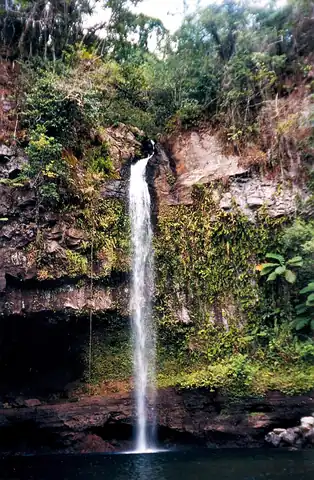 This waterfall
Tavoro Falls
Fiji
Height24 mWidth—
 Most similar
Crescent Falls
Canada
Height27 mWidth—
Also a tiered waterfall, of similar height and with swimming
 Largest curtain
Victoria Falls
Zimbabwe · Zambia
Height108 mWidth1,708 m
Largest single sheet of falling water
 Tallest on earth
Angel Falls
Venezuela
Height979 mWidth—
 Widest on earth
Khone Phapheng Falls
Laos
Height21 mWidth10,783 m
Measured across the whole multi-channel system
Angel Falls is 41× taller than Tavoro Falls. Victoria Falls is 4.5× taller. We don't have a reliable crest width for Tavoro Falls yet, so it is left off the width chart. Tallest · widest lists.
 40:21
 4:46
 1:02
Chosen from YouTube; videos belong to their creators and play from YouTube's privacy-enhanced player.
Guidebook
Lonely Planet · 2023
Covers Taveuni and Bouma National Heritage Park, where the Tavoro Falls trail begins.
Fees at Bouma have risen in recent years. The 2025–26 reports put it at about FJD 50 (~$22) per adult, with children at around half price; in 2023 visitors paid FJD 36. One fee covers all three falls. Pay in Fijian dollar cash at the visitor centre, as there are no card machines or ATMs.
Yes. All three falls have natural swimming pools. The lower fall has the largest pool, with changing rooms and picnic tables beside it, and the upper fall has the quietest. The middle pool is less suited to swimming. After heavy rain the water rises and the upper trails can be cut off, so stay at the first fall then.
Allow two and a half to four hours for the round trip with swims. The first fall is 10–15 minutes from the visitor centre. The second is another 30–40 minutes up a rocky trail with a rope-assisted stream crossing, and the third is another 20–40 minutes through the forest. A guide is not required.
By taxi or hire car, about 45–60 minutes on the east coast road. Taxis are unmetered, so agree the price and waiting time first; one visitor paid FJD 100 (~$44) for a half-day return in 2023. Many resorts run their own Bouma trips. Buses run the coast road a few times a day, but not reliably enough for a day trip.
A trail of about five kilometres each way from Lavena village, at the end of the east coast road, along the shore to Wainibau Falls, where you swim into a gorge to find a second fall. It takes three to four hours return, costs about FJD 30–35 (~$13–16), and has one un-bridged river crossing that can be waist-deep after rain.
The 180th meridian crosses Taveuni, and a marker near Waiyevo on the west coast lets you straddle it. The International Date Line itself bends east around Fiji, so the whole country keeps one date and time zone. You do not change days when you cross the marker; it is purely a geographical line.
Parts of it are, but the Somosomo Strait has strong tidal currents, and the famous Great White Wall runs from about 15 to over 60 metres and needs a slack tide, so operators advise Advanced Open Water certification for it. Newer divers do well on the shallower bommies with an experienced local dive shop. Visibility is best from May to September.
Not if you hold a US, Canadian, UK or EU/Schengen passport. You get a free visitor permit for up to four months on arrival. You need a passport valid for at least six months beyond your stay, an onward or return ticket, and a completed arrival card. Stays can be extended to six months in total.
Prices, fees and entry rules change. We re-check full guides regularly; spotted something out of date? Tell us.
Nearby

Siri Waterfall, formerly called Santa Maria Waterfall, is a 120-metre-high waterfall located about 3 km…

The Rainbow Falls, Māori name Waianiwaniwa, , are a single-drop waterfall located on the Kerikeri River near…

Haruru Falls is a five-metre-high waterfall near the settlement of Haruru in the Far North District of New…

Whangārei Falls is located just on the outskirts of Whangārei on Boundary Road in the suburb of Tikipunga, a…